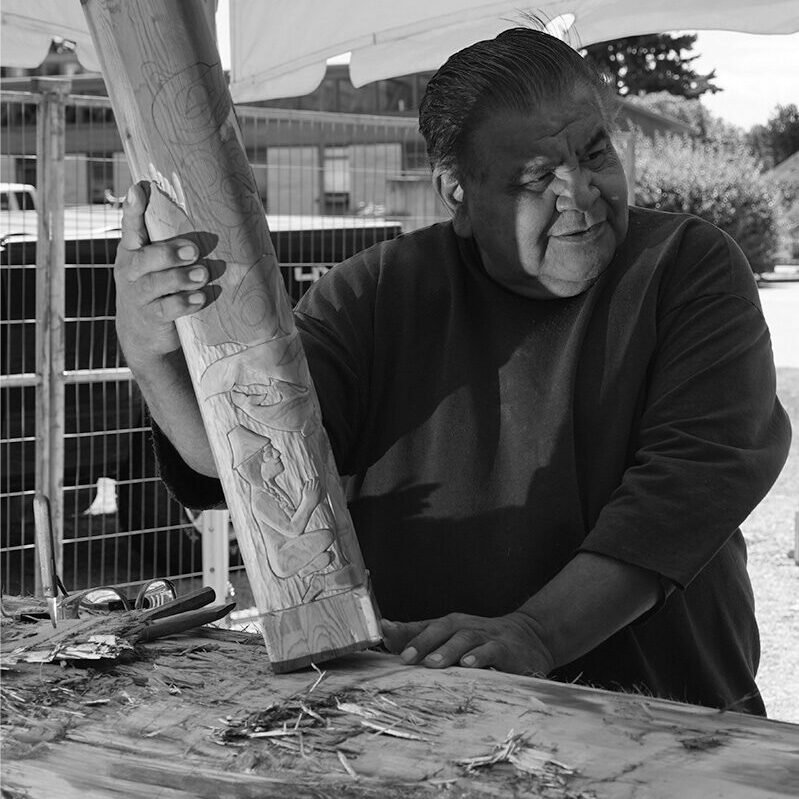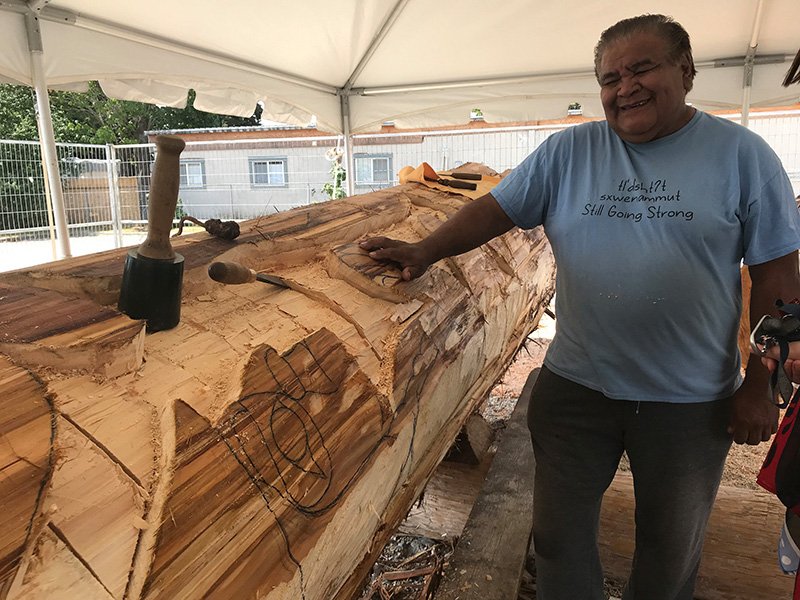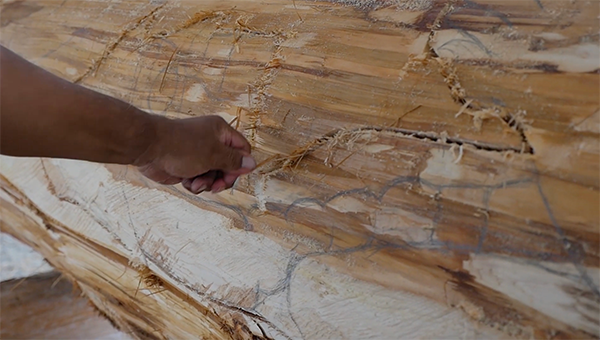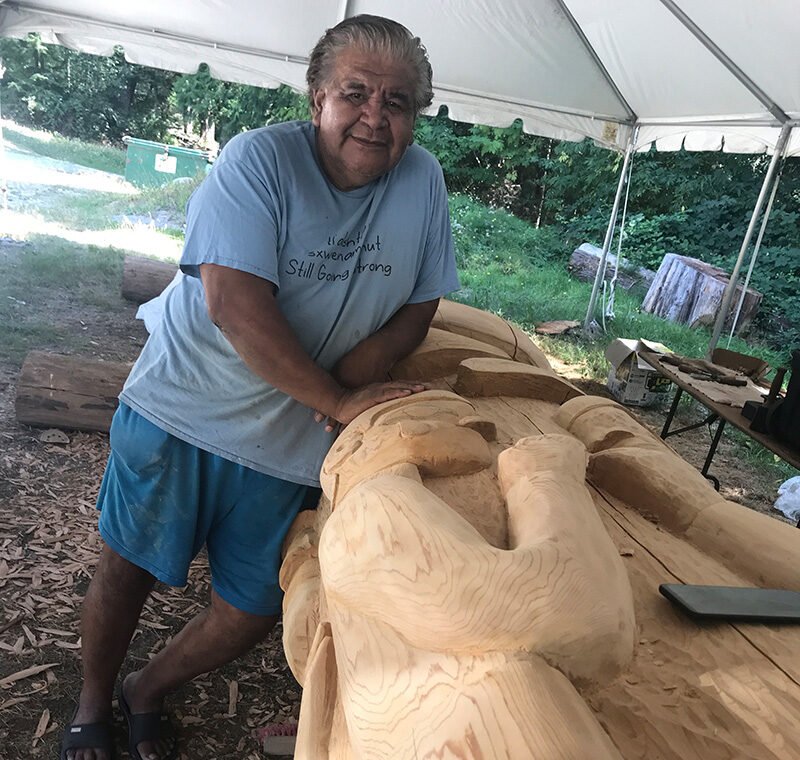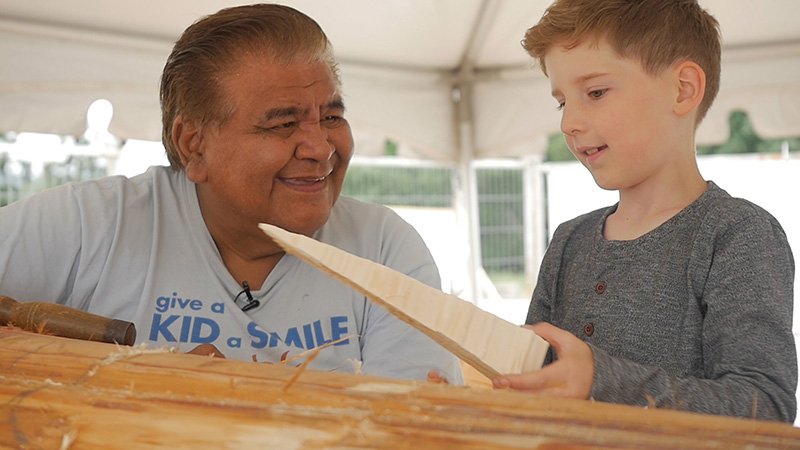
Ɂantuni Tony Paul was a shishalh Nation master carver who has practised his art form from the young age of 16 years.
When you travel to the shishalh swiya (Sunshine Coast), you will see Tony’s art, including totems, semi relief wood sculptures and wood plaques on many public buildings throughout the region. A visual storyteller, every carving tells an amazing story of a rich culture and history.
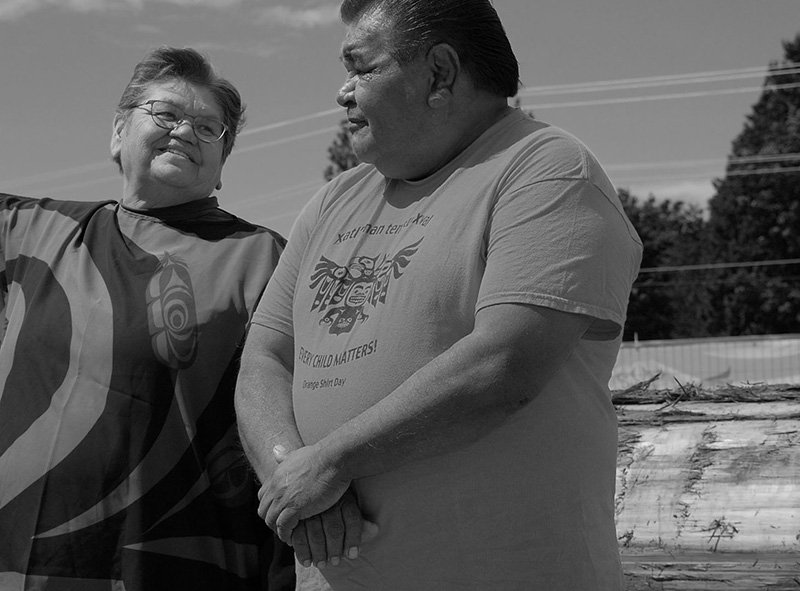
In October 2021, Ɂantuni Tony Paul and his wife, Cindy, tragically passed away due to COVID-19. Their loss was deeply felt by their family, the shíshálh Nation, and the entire Sunshine Coast community.
Although Tony did not have the opportunity to complete the Reconciliation Totem Pole himself, his vision continues to guide the project. His teachings, generosity, and artistry live on in every carving, every story shared, and every person who has helped shape this remarkable work.
When the pole is completed and raised at the site of the former St. Augustine Indian Residential School, it will stand not only as a symbol of truth, healing, and reconciliation, but also as a lasting tribute to Tony's extraordinary legacy and his enduring gift to the community.
The Pole Design
The Reconciliation Totem Pole is the vision of shíshálh Master Carver Ɂantuni Tony Paul, whose artistry and deep cultural knowledge helped shape one of the most significant projects of the syiyaya Reconciliation Movement.
Tony began carving at the age of sixteen and became one of the Sunshine Coast's most respected Indigenous artists. His totem poles, relief carvings, and public artworks can be found throughout the shíshálh swiya, each one telling a story rooted in the history, culture, and traditions of the shíshálh people.
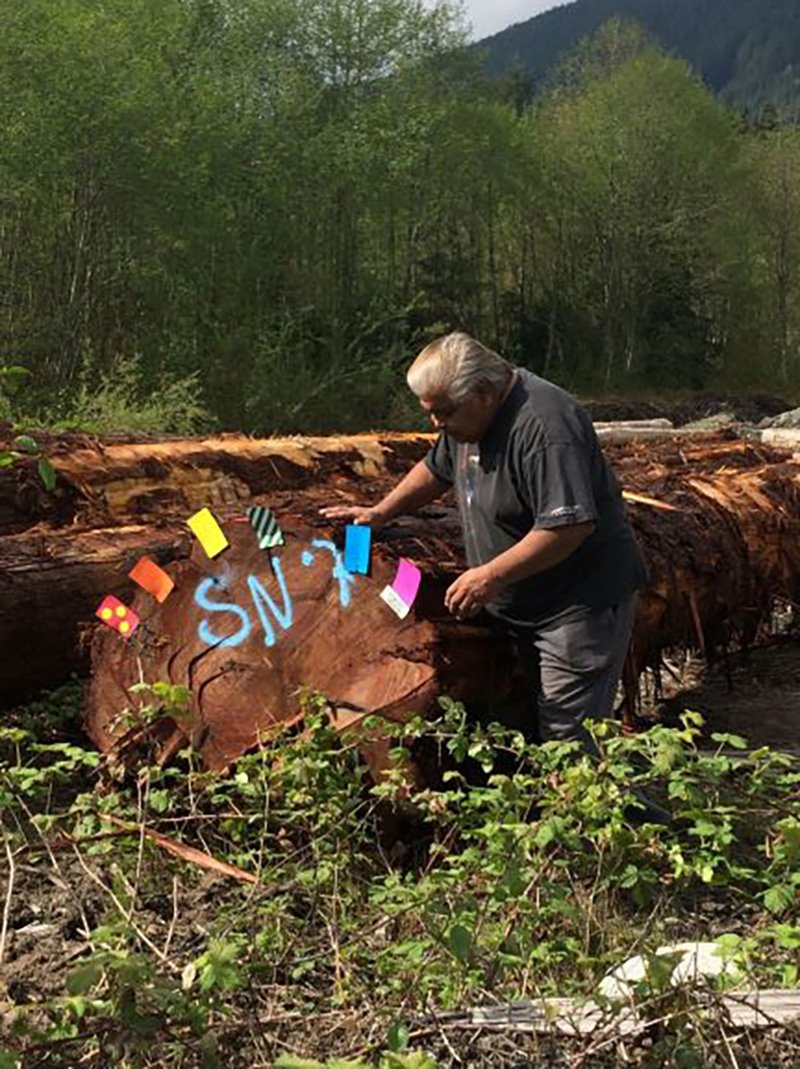
Believing that cedar carries stories, Tony envisioned the Reconciliation Totem Pole as a lasting tribute to the Survivors of St. Augustine Indian Residential School, their families, and all those committed to walking the journey of reconciliation together. Every figure carved into the pole tells a story of truth, resilience, healing, and hope, inviting us to remember the past while looking toward a stronger future.
The Design
The 30-foot Reconciliation Totem Pole rises from a base carved to represent the original St. Augustine Indian Residential School in Sechelt, acknowledging the painful history experienced by generations of Indigenous children.
Above the school are two children kneeling in prayer, their hands clasping rosaries and tears flowing down their faces. They represent the first two shíshálh children to attend the school, Cecil August and Dave Paul and the countless children whose lives were forever changed by the Residential School system.
Surrounding the children are two Elders dressed in traditional regalia, offering protection, comfort, and love. Their presence symbolizes healing, cultural strength, and the enduring support of community across generations.
Above them are the crests of the four clans of the shíshálh Nation:
• Huham (Frog) and K'aykw (Eagle) of the tewankw People
• Mayukw (Grizzly Bear) of the ts'unay People
• Wewekw'nachem (Wolf) of the xenichen People
• Stalashen (Orca) of the kalpilin People
Each clan is represented by both a parent and child, symbolizing the strength of family, the continuity of culture, and the intergenerational healing taking place within the shíshálh Nation.
Near the top of the pole, a circle of four drums whose four colours red, white, black, yellow represents the four people of the world, the four seasons, the four directions and the four parts of each human life. The drums support the traditional Longhouse, celebrating the enduring strength of shashishalhem, cultural traditions, and community. Resting above the Longhouse is the double-headed eagle, the symbol of the shíshálh Nation, representing leadership, vision, and unity.
Included on the pole are a small frog and one small hummingbird, symbols of healing, renewal, communication, and hope. Together, these carvings remind us that reconciliation is not a single moment in time, but an ongoing journey built through truth, relationships, and respect.